Corporate governance broadly refers to the mechanisms, processes and relations by which organizations are controlled and governed. Corporate governance includes the processes through which organizations’ objectives are set and pursued in the context of the social, regulatory and market environment. The framework of corporate governance assists the Board of Directors to ensure accountability, fairness and transparency in an organization’s relationship with its all stakeholders.
The ideal corporate governance framework consists of:
A good Corporate Governance policy ensures transparency, provides protection for investors, other stakeholder’s interests and enhances companies' value.The purpose of formulating Corporate Governance policy is to establish best-practice corporate governance principles in functioning of SICO B.S.C (c) (“the Bank” or “SICO”) and its subsidiaries.This Corporate Governance policy provides frameworks for setting the principles of effective
SICO is committed to upholding the highest standards of corporate governance. This entails complying with regulatory requirements, protecting the rights and interests of all stakeholders, enhancing shareholder value, and achieving organizational efficiency. The Bank has Board-approved policies for risk management, compliance and internal controls, in accordance with the latest rules and guidelines from the Central Bank of Bahrain (CBB).
The adoption and implementation of corporate governance is the direct responsibility of the Board of Directors. The Board is committed to excellence in corporate governance, and adheres to rules of the High Level Controls Module (HC Module) of the Central Bank of Bahrain, and the principles of the Corporate Governance Code of the Kingdom of Bahrain issued by the Ministry of Industry and Commerce and best practices as per international standards.
SICO’s corporate governance framework comprises the Board and the Board Committees, the Management reporting structure and the Management Committees, the Control functions such as Risk Management, Compliance, AML and Internal Audit, the Corporate Governance policy; Board and Committee Charters; Code of Business Conduct; operational policies and procedures; internal controls and risk management systems; compliance procedures; external audit; effective communications and transparent disclosure; and measurement and accountability.
The corporate governance policy should be read in conjunction with other Board approved polices & procedures.
The Bank will follow the corporate governance principles as issued by the Ministry of Industry, Commerce and Tourism in the Corporate Governance Code and the CBB as per the High-Level Controls (HC) Module of the Rulebook. The principles are as follows:
The Board is accountable to the shareholders for the creation and delivery of strong, sustainable financial performance and long-term shareholder value. The Board works as a team to provide strategic leadership to staff, maintain the organisation’s fitness for purpose, set the values and standards for the organisation and ensure that sufficient financial and human resources are available.
The Board’s role and responsibilities are outlined in the Board Charter of the Bank. The Board organizes a formal schedule of matters for its decision-making process to ensure that the direction and control of the Bank rests with the Board. This process includes strategic issues and planning, review of management structure and responsibilities, monitoring management performance, acquisition and disposal of assets, investment policies, capital expenditure, authority levels, treasury policies, risk management policies, the appointment of auditors and review of the financial statements, financing and borrowing activities, reviewing and approving the annual operating plan and budget, ensuring regulatory compliance and reviewing the adequacy and integrity of internal systems and controls framework.
The Chairman is responsible for leading the Board, ensuring its effectiveness, monitoring the performance of the Executive Management and maintaining a dialogue with the Bank’s shareholders. The Chairman also ensures that new Directors receive a formal and tailored induction to facilitate their contribution to the Board.
Without abdicating its overall responsibility, the Board delegates certain responsibilities to Board Committees. This is to ensure sound decision-making and facilitate the conduct of business without unnecessary impediment, since speed of decision-making in the Bank is crucial. When a Committee is formed, a specific Charter of the Committee is established to cover matters such as the purpose, composition and function of the Committee. The Board has three Committees to assist it in carrying out its responsibilities: The Investment Committee, the Audit and Risk Committee and the Nominations, Remuneration and Corporate Governance Committee. The Internal Audit, Compliance and Risk functions reports directly to the Board through the Audit and Risk Committee. From time to time, the Board receives reports and recommendations from Board Committees and Management on matters it considers to be of significance to the Bank.
The Board’s composition is guided by the Bank’s Articles of Association. As of 31 December 2019, the Board consisted of nine Directors, three of which are Independent Directors and six are Executive Directors, including the Chairman and Vice-Chairman. The Bank recognises the need for the Board’s composition to reflect a range of skills and expertise. Profiles of Board Members are listed later in this Review. The Company Secretary is Matthew B. Hansen. The classification of ‘Executive’ Directors, ‘Non-executive’ Directors and ‘Independent’ Directors is per the definitions stipulated by the CBB. Directors are elected by the shareholders at the AGM, subject to prior approval by the CBB, for a period of three years, after which they shall be eligible for re-election for a further three-year period.
In line with the requirements of the CBB’s HC Module, the Bank has put in place Board-approved criteria to determine ‘Test of Independence’ using formal requirements as specified in the CBB rule book and other relevant requirements as assessed by the Board of SICO. The purpose of the Test is to determine whether the Director is ‘Independent of management, and any business or other relationships, which could materially interfere with the Director’s ability to exercise objective, unfettered, or independent judgement; or the Director’s ability to act in the best interests of SICO’. Based on an assessment carried out in 2019, the Board of Directors resolved that the three Non-executive Directors of SICO met the relevant requirements of the ‘Test of Independence’, and accordingly, they were classified as ‘Independent’ Directors and Committee members of SICO’s Board of Directors.
The Board performs a self-evaluation on an annual basis. The Board periodically reviews its Charter and its own effectiveness; and initiates suitable steps for any amendments. The Board also reviews self-evaluations of the individual Board members, Chairman and the Board Committees, and considers appropriately any recommendations arising out of such evaluation.
The Board of Directors’ remuneration is governed by provisions of the Commercial Companies Law 2001 and the CBB. The Directors’ remuneration is approved by the shareholders at the annual general meeting. In addition, the members are paid sitting fees for the various sub committees of the Board. The Board’s remuneration is reviewed by the Nomination, Remuneration and Corporate Governance Committee as per the remuneration policy. Directors’ remuneration is accounted as an expense as per international accounting standards and CBB regulations.
Objectives:
Objectives:
Objectives:
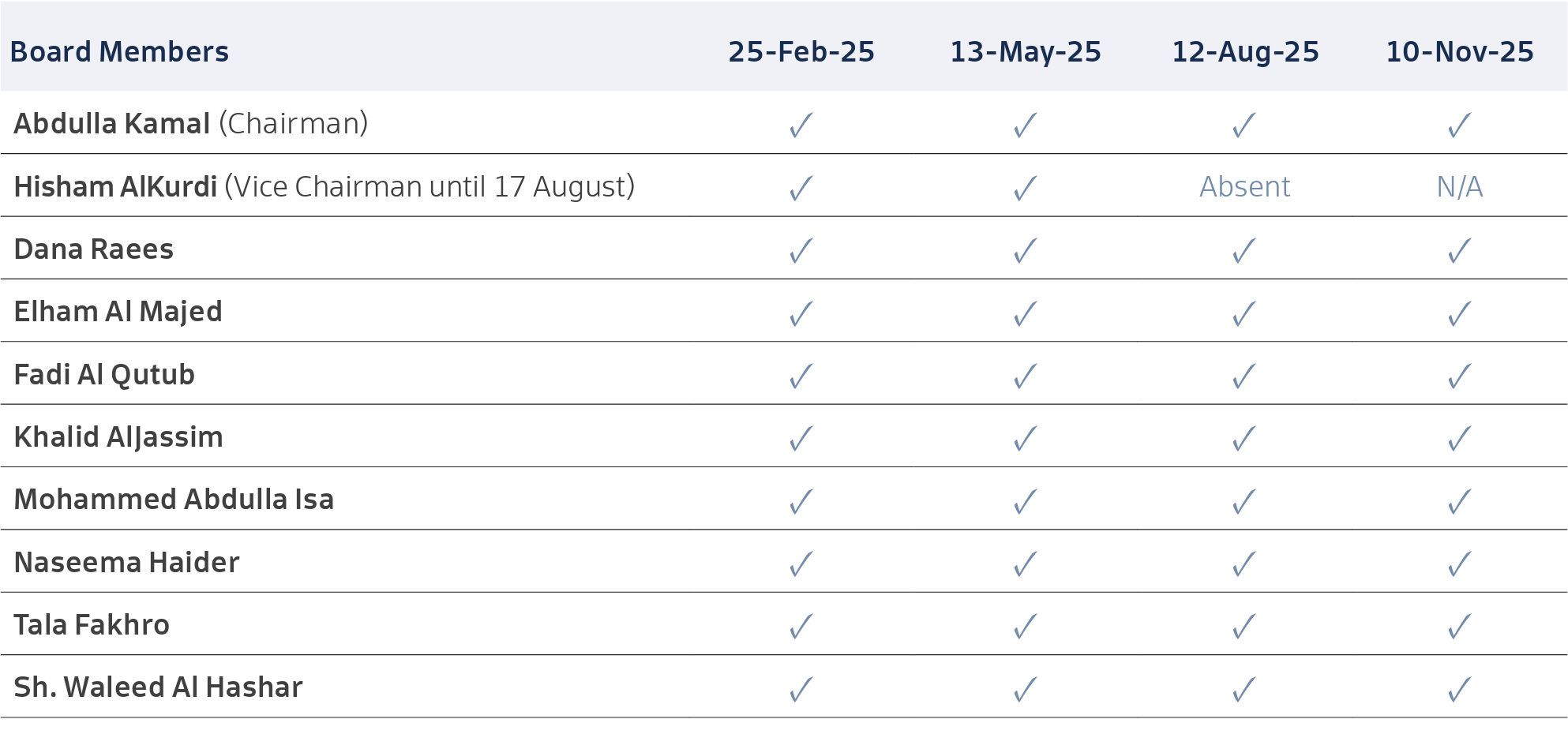
According to the Bahrain Commercial Companies Law and CBB rules, Board meetings will be conducted at least four times a year on a quarterly basis. All Board members must attend at least 75% of all Board meetings within a calendar year. At least 50% of the Directors must attend each Board meeting, including the Chairman or the Vice-Chairman. During 2025, four Board meetings were held in Bahrain, and members’ attendance is noted in the table below:
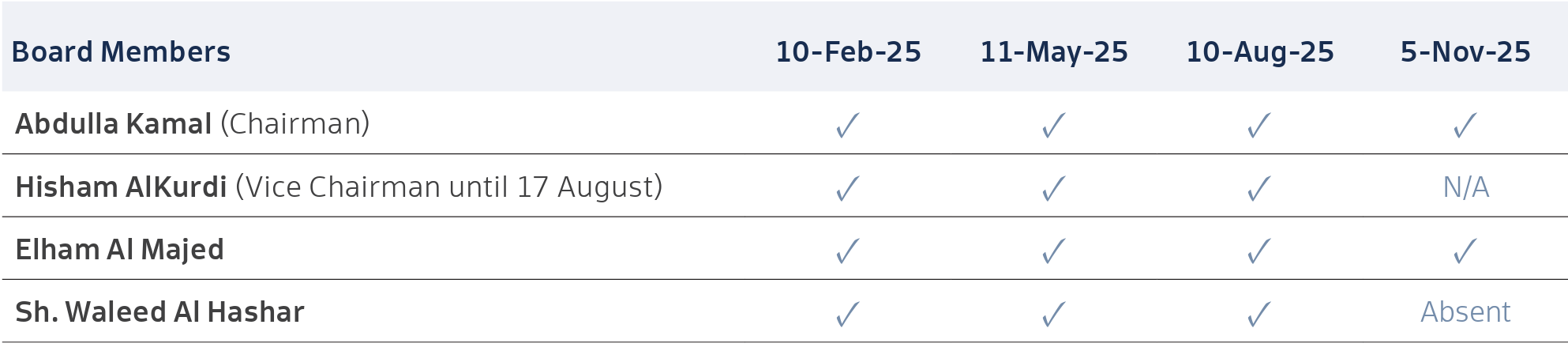


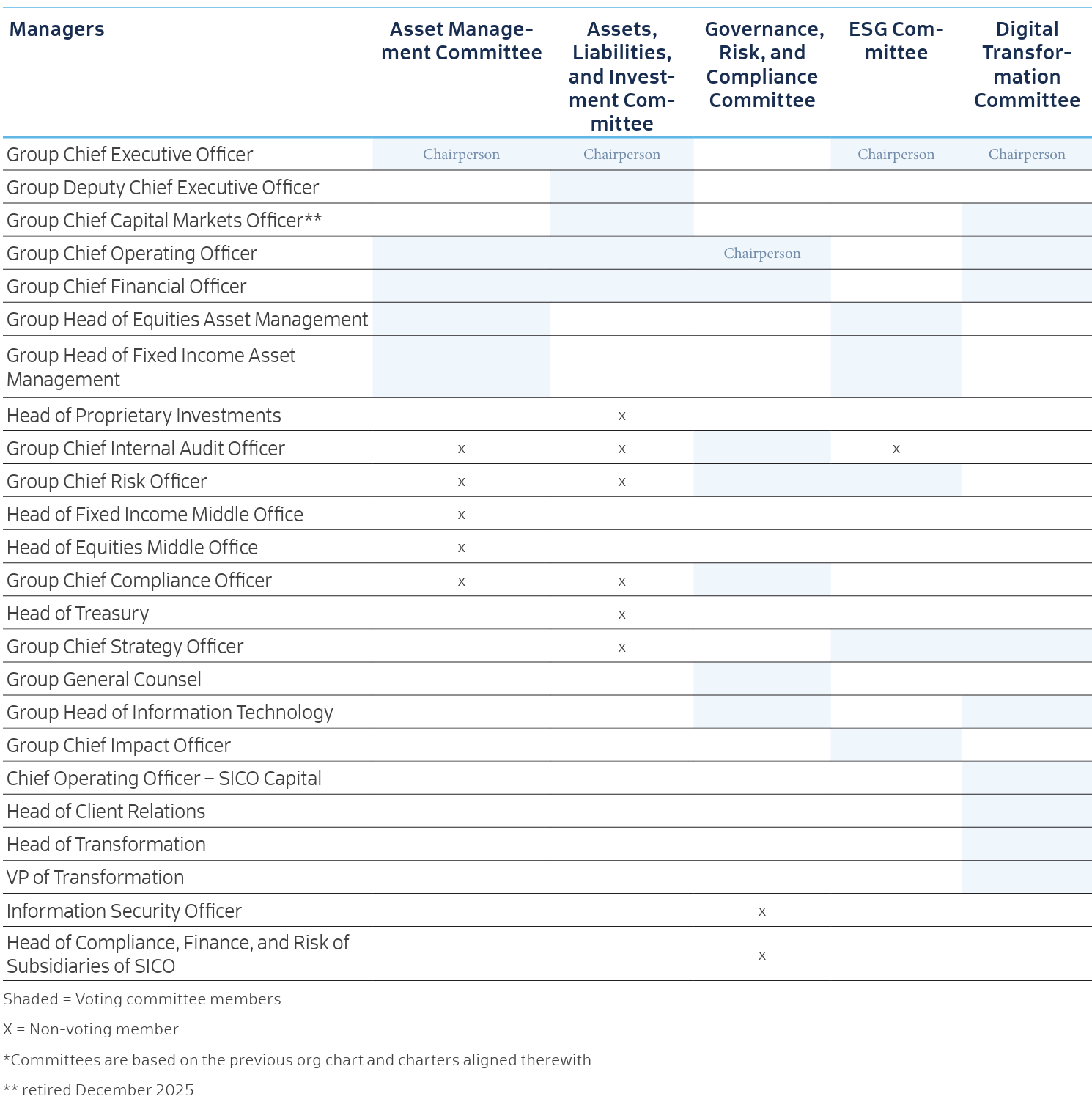
The Board delegates the authority for the day-to-day management of the business to the Group Chief Executive Officer, who is supported by a qualified senior management team and five management committees: Asset Management Committee; Assets, Liabilities, and Investments Committee (ALIC); Governance, Risk, and Compliance Committee (GRCC), ESG Committee, and Digital Transformation Committee.
Objectives:
Oversee the fiduciary responsibilities carried out by the Asset Management Department in managing clients’ discretionary portfolios and the funds operated and managed by SICO. It also reviews the investment strategy of the Bank’s funds and portfolios, reviews portfolio performance, and reviews subscription, redemptions, and compliance.
Objectives:
ALIC acts as the principal policy-making body responsible for overseeing the Bank’s capital and financial resources. It is also responsible for managing the balance sheet and all proprietary investment activities, including investment strategy and asset, country, and industry/sector allocations. The committee is specifically responsible for managing the balance sheet risk, capital and dividend planning, forecasting and monitoring interest rate risk positions, and liquidity and funds management. The committee is also responsible for formulating and reviewing the Bank’s investment policies (subject to approval by the Board), strategies and performance measurement and assessment.
Objective:
Oversee the Internal Control functions carried out within SICO by various departments. The scope of GRCC is to look into strengthening the internal control culture throughout the company by ensuring that each department head takes ownership, responsibility, and accountability for internal control. The Committee is entrusted with the responsibility to consult and advise the Board of Directors in the assessment and decision-making concerning the Bank’s system of risk management, internal control, and corporate governance.
Objective:
Support the integration of ESG considerations into the investment decision-making processes across the Equity and Fixed Income Asset Management Departments and the Proprietary Investment Department. It oversees the organization’s Responsible Investment Philosophy, assesses the impact of ESG trends at various levels, develops and reviews ESG policies and guidelines, monitors investment performance related to ESG criteria, manages ESG risks and opportunities, and provides specialised training for investment teams. Additionally, the committee reviews and approves changes to investment policies, addresses ESG-related guideline breaches, and updates the Model Portfolio as needed.
Objective:
Align the Bank’s business strategy with technological initiatives to drive digital transformation. It oversees the implementation of fintech solutions, enhances customer digital engagement, streamlines internal operations, and ensures that technology projects support business growth. The committee reviews and prioritises digital initiatives, monitors progress, manages associated risks, and advises on best practices. Additionally, it reports decisions to the Board and periodically reassesses its charter to maintain relevance.
SICO’s Corporate Governance framework comprises of Board and Committee Charters, Code of Business Conduct, operational policies and procedures, internal controls and risk management systems, compliance procedures, delegated authority limits (DAL), internal and external audit, effective communications and transparent disclosure and measurement and accountability.
SICO conducts itself in accordance with the highest standards of ethical behaviour. A Code of Conduct for SICO Staff has been developed to govern the personal and professional conduct of all employees. The Code of Conduct outlines areas of conflict of interest, confidentiality, fair and equitable treatment, ethics and acting responsibly, honestly, fairly and ethically; and managing customer complaints. A Whistleblowing Policy and Procedures is included within the Code of Conduct for SICO Staff.
The Bank has in place policies that govern the recruitment and appointment of relatives to the Bank. Existing employees are required to alert the Human Resource Department of any relatives, or relationship of other employees or candidates being interviewed. Failure to do so will be seen as a breach of conduct and subject to disciplinary action as per the Bank’s policy.
As a licensed conventional wholesale bank and listed company, SICO has in place comprehensive policies and procedures to ensure full compliance with the relevant rules and regulations of the CBB and the Bahrain Bourse. The Bank has an independent Compliance Department in keeping with Basel and CBB guidelines. The Compliance Department acts as the central coordinator for all matters relating to regulatory reporting and other requirements.
Anti-money laundering measures are also an important area for the Compliance Department, with a designated Money Laundering Reporting Officer (MLRO) and Deputy MLRO. The Bank has documented anti-money laundering and combating the financing of terrorism procedures in conformity to the regulatory requirements in the Kingdom of Bahrain. SICO has implemented a risk-based automated transaction monitoring system, which further enhances the Bank’s anti-money laundering measures in line with the regulations of the CBB.
SICO conducts all communications with its stakeholders in a professional, honest, transparent, understandable, accurate and timely manner. Main communications channels include an annual report, corporate website and regular announcements in the appropriate local media. To ensure disclosure of relevant information to all shareholders on a timely basis, the Bank publishes its annual report and the past ten years’ financial statements on the corporate website.
The Directors make every practicable effort to arrange their personal and business affairs to avoid a conflict of interest with the Bank. The Directors disclose their interests in other entities or activities to the NRCG committee on an annual basis, inform the Bank of any conflict of interest whenever it arises and abstain from voting on any related subject matter. The Bank reviewed all such transactions during 2019 and there were no transactions involving potential conflicts of interest which need to be brought to the shareholders’ attention. The related party transaction details are disclosed in Note 26 of the Consolidated Financial Statements.
The remuneration paid to Board members and senior management personnel are disclosed in Note 26 of the Consolidated Financial Statements. The information on fees paid to External Auditors for audit and other services will be available to the CBB and shareholders upon request, provided such disclosure does not impact the interest of Bank.
Every conventional bank licensee is expected to comply with rules and guidance mentioned in the High-Level Controls Module issued by the CBB under Rulebook Volume 1. Any non-compliance with the Module needs to be explained by disclosure in the annual report to shareholders and the CBB.
SICO is in compliance with the module except for the following:
HC-1.4.6 and HC-1.4.8, which stipulate that the chairman of the Board of Directors should be an independent director, SICO Chairman Shaikh Abdulla bin Khalifa Al Khalifa is considered an Executive Director as he represents SICO’s major shareholder. However, this does not compromise the high standards of corporate governance as the bank follows strict policies to manage conflict of interest in Board decisions.
HC-1.8.2, HC-4.2.2 and HC-5.3.2 state that the Corporate Governance Committee, Nomination Committee and Remuneration Committee must include only 3 independent directors. The Chairman of the Nomination, Remuneration and Corporate Governance Committee is an independent director, however, the remaining two members are executive directors. The bank is of the opinion that this does not compromise the high standards of corporate governance as the bank has implemented measures to manage potential conflict of interest.
HC-6.5.49 stipulates that every 5 years, the audit committee must commission an independent external quality assurance review of the internal audit function. Currently, SICO plans for the same before the end of 2020.
HC-6.5.51, requires senior management to ensure that all internal audit findings and recommendations are resolved within six months for high risk issues and twelve months for others from the issue date of the subject internal audit report. Some of the findings have not been resolved within the stipulated time frame, however, relevant management is working on addressing this issue.
The Bank’s total compensation approach, which includes the variable remuneration policy, sets out the Bank’s policy on remuneration for Directors and senior management, and the key factors that are taken into account in setting the policy.
The current policy framework and incentive components were approved by the shareholders in the Annual General Meeting held on March 30, 2015. The policy is effective from the year 2014 annual performance incentives onwards The key features of the approved remuneration framework are summarised below.
It is the Bank’s basic compensation philosophy to provide a competitive level of total compensation to attract and retain qualified and competent employees. The Bank’s variable remuneration policy will be driven primarily by a performance-based culture that aligns employee interests with those of the shareholders of the Bank. These elements support the achievement of our objectives through balancing rewards for both short-term results and long-term sustainable performance. Our strategy is designed to share our success, and to align employees’ incentives with our risk framework and risk outcomes.
The quality and long-term commitment of all of our employees is fundamental to our success. We therefore aim to attract, retain and motivate the very best people who are committed to maintaining a career with the Bank, and who will perform their role in the long-term interests of our shareholders. The Bank’s reward package comprises the following key elements:
A robust and effective governance framework ensures that the Bank operates within clear parameters of its compensation strategy and policy. All compensation matters, and overall compliance with regulatory requirements, are overseen by the Nomination, Remuneration and Corporate Governance Committee of the Board of Directors (NRCGC).
The Bank’s remuneration policy in particular considers the role of each employee, and has set guidance on whether an employee is a Material Risk Taker and/or an Approved Person in a business line, control or support function. An Approved Person is an employee whose appointment requires prior regulatory approval because of the significance of the role within the Bank; and an employee is considered a Material Risk Taker if he/she is the Head of a significant business line, or any individuals within their control who have a material impact on the Bank’s risk profile.
In order to ensure alignment between what we pay our people and our business strategy, we assess individual performance against annual and long-term financial and non-financial objectives summarised in our performance management system. This assessment also takes into account adherence to the Bank’s values, risks and compliance measures and above all integrity. Altogether, performance is therefore judged not only on what is achieved over the short- and long-term, but also importantly on how it is achieved as the NRCGC believes the latter contributes to the long-term sustainability of the business.
The NRCGC has oversight of all reward policies for the Bank’s employees. The NRCGC is the supervisory and governing body for compensation policy, practices and plans. It is responsible for determining, reviewing and proposing variable remuneration policy for approval by the Board. It is responsible for setting the principles and governance framework for all compensation decisions. The NRCGC ensures that all persons must be remunerated fairly and responsibly. The remuneration policy is reviewed on a periodic basis to reflect changes in market practices, the business plan and risk profile of the Bank.
The responsibilities of the NRCGC with regards to the Bank’s variable remuneration policy, as stated in its mandate, include but are not limited to, the following:
As outlined in the Corporate Governance section, the Board is satisfied that all non-executive Directors are independent. The NRCGC comprises of the following members:

The total amount of NRCG siting fees for 2025 is BD 7,000 [2024: BD 7,000]
The NRCGC did not appoint any external consultants during the year.
The principles of this remuneration policy apply on a Group-wide basis. However, application of deferral requirements and issue of non-cash instruments for each subsidiary of the Bank will be determined by applicable local regulations and market norms.
The Bank’s Board remuneration is determined in line with the provisions of Article 188 of the Bahrain Commercial Companies Law, 2001. The Board of Directors’ remuneration will be capped so that total remuneration (excluding sitting fees) does not exceed 10% of the Bank’s net profit after all required deductions as outlined in Article 188 of the Companies law, in any financial year. Board remuneration is subject to approval of the shareholders in the Annual General Meeting. Remuneration of non-executive Directors does not include performance-related elements such as grants of shares, share options or other deferred stock-related incentive schemes, bonuses or pension benefits.
Variable remuneration is performance related and consists primarily of the annual performance bonus award. As a part of our staff’s variable remuneration, the annual bonus rewards delivery of operational and financial targets set each year, the individual performance of the employees in achieving those targets, and their contribution to delivering the Bank’s strategic objectives.
The Bank has adopted a Board-approved framework to develop a transparent link between variable remuneration and performance. The framework is designed on the basis of meeting both satisfactory financial performance and the achievement of other non-financial factors, that will, all other things being equal, deliver a target bonus pool for employees, prior to consideration of any allocation to business lines and employees individually. In the framework adopted for determining the variable remuneration pool, the NRCGC aims to balance the distribution of the Bank’s profits between shareholders and employees.
Key performance metrics at the Bank level include a combination of short-term and long-term measures, and include profitability, solvency, liquidity, risk diversification, strategy implementation and growth indicators. The performance management process ensures that all goals are appropriately cascaded down to respective business units and employees.
In determining the amount of variable remuneration, the Bank starts from setting specific targets and other qualitative performance measures that would result in a target top-down bonus pool. The bonus pool is then adjusted to take account of risk via the use of risk-adjusted measures (including forward-looking considerations).
The NRCGC carefully evaluates practices by which remuneration is paid for potential future revenues whose timing and likelihood remain uncertain. The NRCGC demonstrates that its decisions are consistent with an assessment of the Bank’s financial condition and future prospects.
The Bank uses a formalised and transparent process to adjust the bonus pool for quality of earnings. It is the Bank’s objective to pay bonuses out of realised and sustainable profits. If the quality of earnings is not strong, the profit base could be adjusted based on the discretion of the NRCGC.
For the overall Bank to have any funding for distribution of a bonus pool, threshold financial targets have to be achieved. The performance measures ensure that total variable remuneration is generally considerably contracted where subdued or negative financial performance of the Bank occurs. Furthermore, the target bonus pool as determined above is subject to risk adjustments in line with the risk assessment and linkage framework.
Remuneration of control functions
The remuneration level of staff in the control and support functions allows the Bank to employ qualified and experienced personnel in these functions. The Bank ensures that the mix of fixed and variable remuneration for control and support function personnel should be weighted in favour of fixed remuneration. The variable remuneration of control functions is to be based on function-specific objectives, and is not to be determined by the financial performance of the business areas they monitor.
The Bank’s performance management system plays a major role in deciding the performance of the support and control units on the basis of the objectives set for them. Such objectives are more focused on non-financial targets that include risk, control, compliance and ethical considerations, as well as the market and regulatory environment, apart from value-adding tasks which are specific to each unit.
The variable remuneration of the business units is primarily determined by key performance objectives set through the performance management system of the Bank. Such objectives contain financial and non-financial targets, including risk control, compliance and ethical considerations, as well as market and regulatory requirements. The consideration of risk assessments in the performance evaluation of individuals ensures that any two employees who generate the same shortrun profits, but take different amounts of risk on behalf of the bank, are treated differently by the remuneration system.
The purpose of risk linkages is to align variable remuneration to the risk profile of the Bank. In its endeavour to do so, the Bank considers both quantitative measures and qualitative measures in the risk assessment process. Both quantitative measures and human judgement play a role in determining any risk adjustments. The risk assessment process encompasses the need to ensure that the remuneration policy as designed reduces employees’ incentives to take excessive and undue risks, is symmetrical with risk outcomes, and delivers an appropriate mix of remuneration that is risk aligned.
The Bank’s NRCGC considers whether the variable remuneration policy is in line with the SICO’s risk profile, and ensures that through the Bank’s ex-ante and ex-post risk assessment framework and processes, remuneration practices where potential future revenues’ timing and likelihood remain uncertain, are carefully evaluated.
Risk adjustments take into account all types of risk, including intangible and other risks such as reputation risk, liquidity risk and the strategic measures. The Bank undertakes risk assessments to review financial and operational performance against business strategy and risk performance prior to distribution of the annual bonus. The Bank ensures that total variable remuneration does not limit its ability to strengthen its capital base. The extent to which capital needs to be built up is a function of the Bank’s current capital position and its ICAAP.
The bonus pool takes into account the performance of the Bank which is considered within the context of the Bank’s risk management framework. This ensures that the variable pay pool is shaped by risk considerations and Bank-wide notable events.
The size of the variable remuneration pool and its allocation within the Bank takes into account the full range of current and potential risks, including:
The NRCGC keeps itself abreast of the Bank’s performance against the risk management framework. The NRCGC will use this information when considering remuneration to ensure returns, risks and remuneration are aligned.
The Bank has an ex-post risk assessment framework which is a qualitative assessment to back-test actual performance against prior risk assumptions.
In years where the Bank suffers material losses in its financial performance, the risk adjustment framework will work as follows:
The NRCGC, with the Board’s approval, can rationalise and make the following discretionary decisions:
The Bank’s malus and clawback provisions allow the Bank’s Board of Directors to determine that, if appropriate, unvested elements under the deferred bonus plan can be forfeited/adjusted, or the delivered variable remuneration recovered in certain situations. The intention is to allow the Bank to respond appropriately if the performance factors on which reward decisions were based turn out not to reflect the corresponding performance in the longer-term. All deferred compensation awards contain provisions that enable the Bank to reduce or cancel the awards of employees whose individual behaviour has had a materially detrimental impact on the Bank during the concerned performance year.
Any decision to take back an individual’s awards can only be taken by the Bank’s NRCGC. The NRCGC takes into account the advice of the CEO, and Risk, Finance and HR Departments as appropriate.
The Bank’s malus and clawback provisions allow the Bank’s Board to determine that, if appropriate, vested/unvested elements under the deferred bonus plan can be adjusted/cancelled in certain situations. These events include the following:
Variable remuneration has following main components:
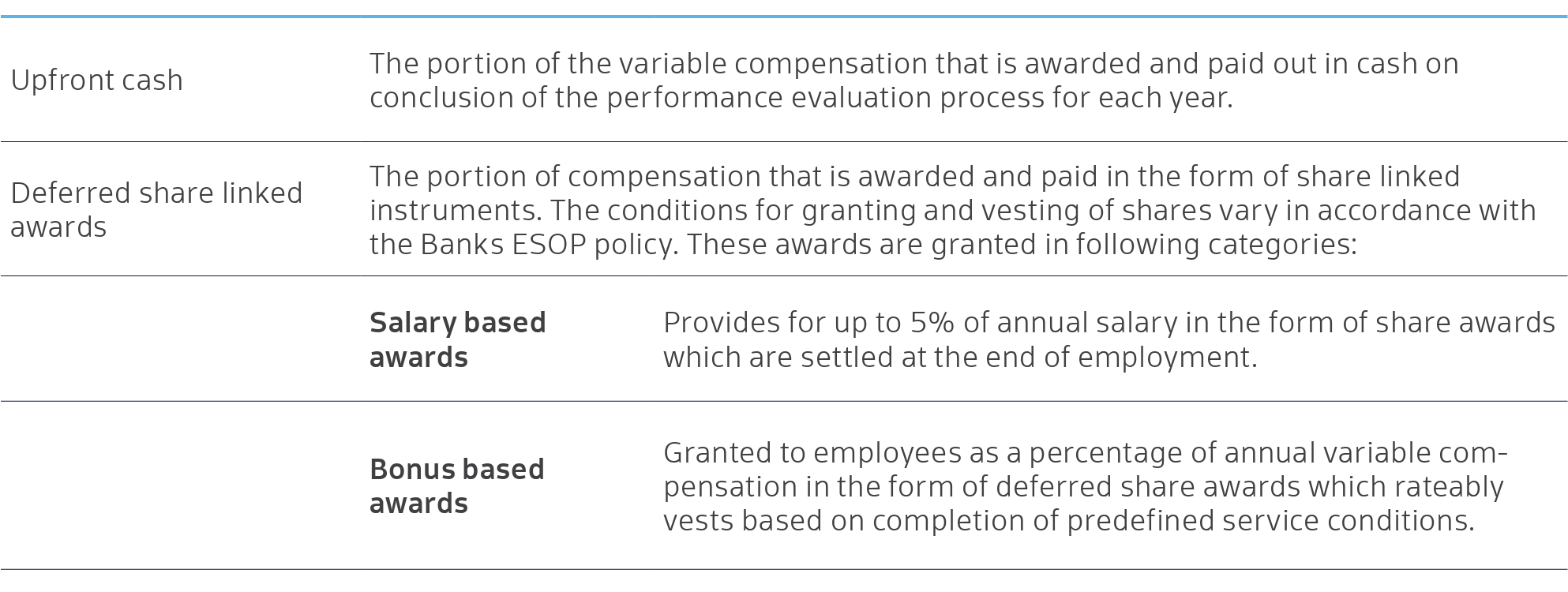
All deferred awards are subject to malus provisions. The number of equity share awards is linked to the Bank’s share price as per the rules of the Bank’s ESOP Scheme. Any dividend on these shares is released to the employee as and when it is declared.
All employees above a defined grade shall be subject to deferral of variable remuneration as follows:
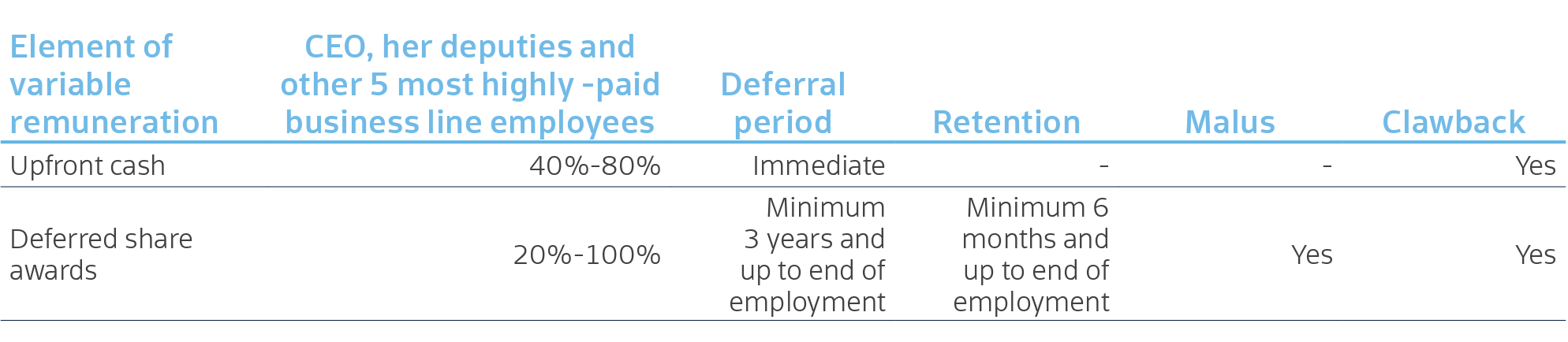
The NRCGC, based on its assessment of role profile and risk taken by an employee, could increase the coverage of employees that will be subject to deferral arrangements.
Details of remuneration paid
a) Board of Directors

b) Employee remuneration
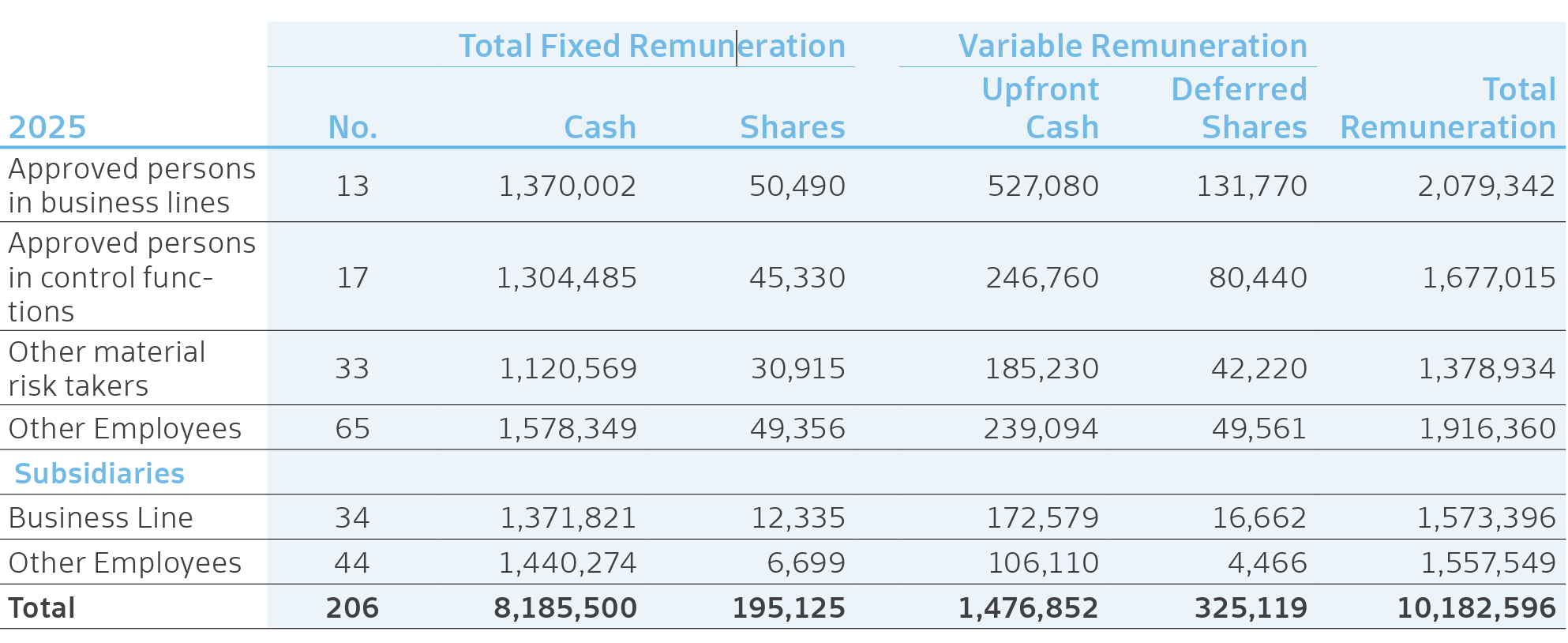
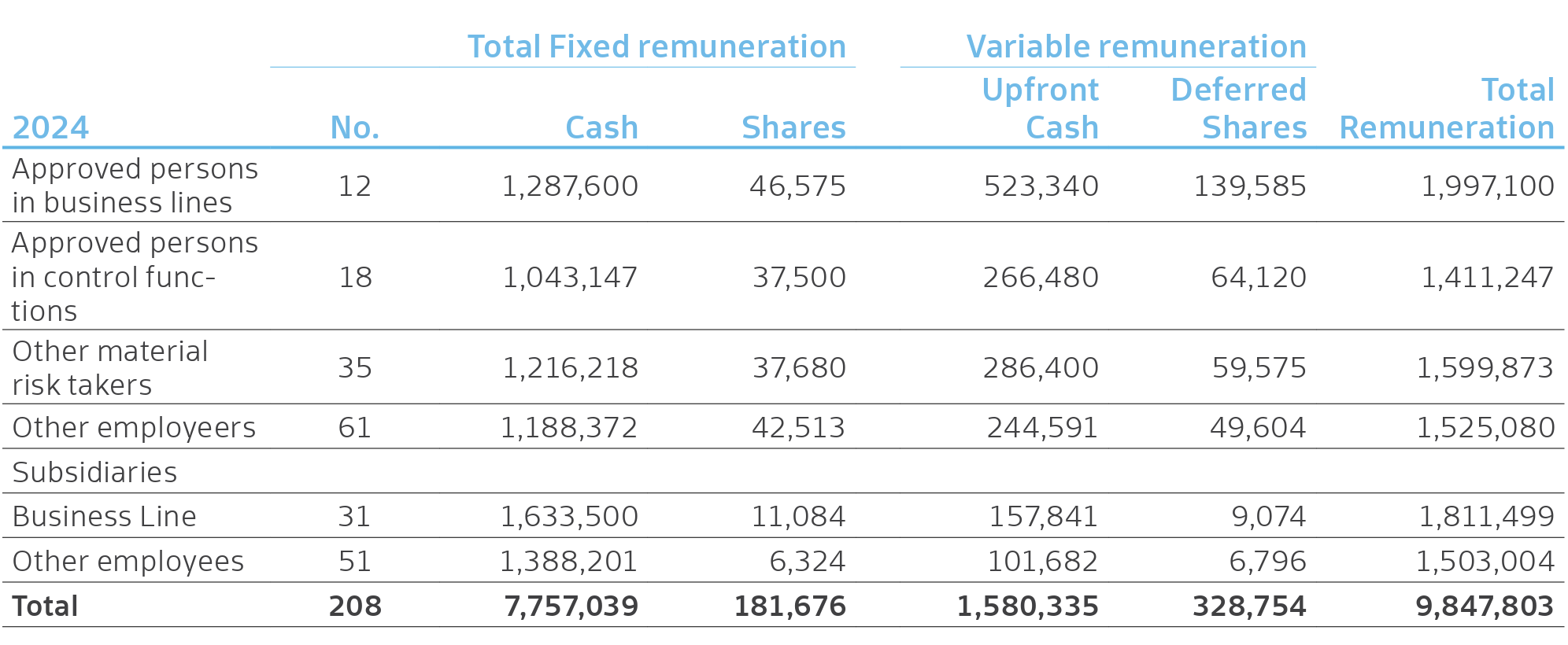
Notes:
The amounts reported above represent actual awards for 2025 and 2024 rather than accruals and changes in value of prior period awards. Accordingly, the numbers and amounts above may not necessarily agree with numbers/ amounts reported in the financial statements.
c) Deferred awards
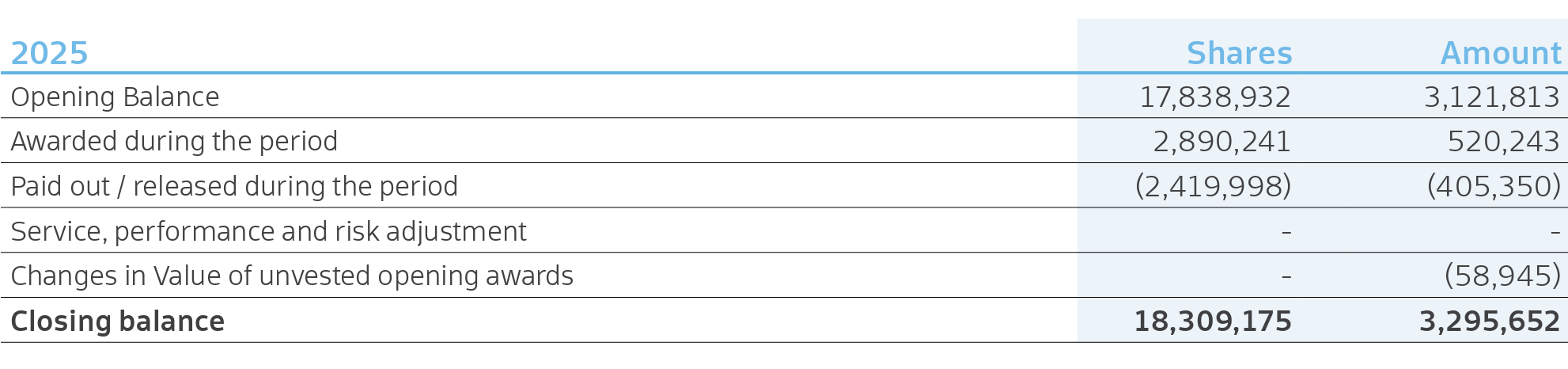
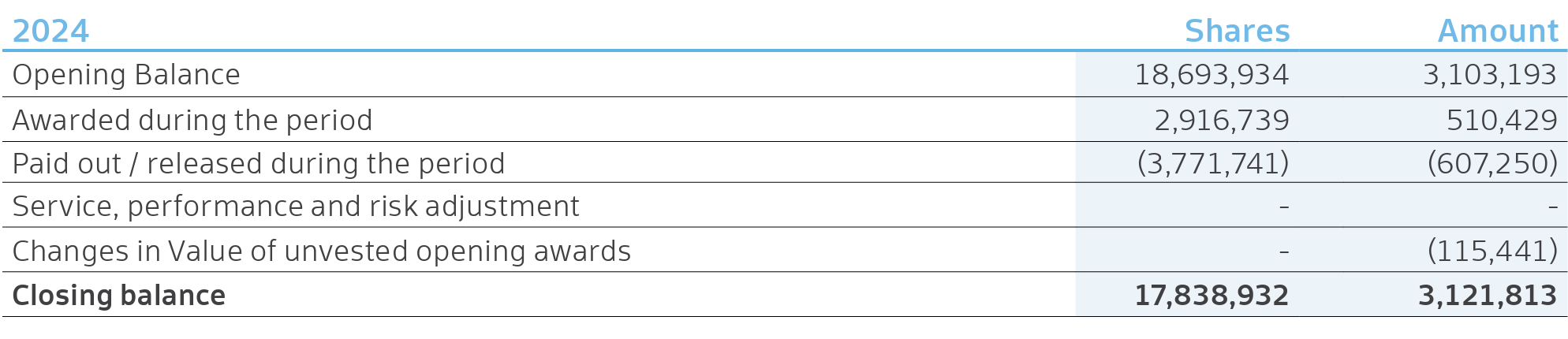
Notes :
SICO is committed to the highest standards of good governance, openness, transparency, integrity and accountability. Consequently if any Staff Member has well-founded concerns, they have a duty to SICO and their colleagues to speak up and report the situation immediately to their Department Head in good faith so that the matter can be promptly investigated.
These concerns may include any of the following:
The Department Head must then report such notifications to the Head of Internal Audit as soon as reasonably practicable. If the issues or concerns relate to the Department Head, the staff member should contact the Head of Internal Audit directly. If the situation relates to the Head of Internal Audit then the staff member should raise the issue with the Chief Executive Officer. Additionally, if the disclosures are not investigated, this should be raised as an issue with the Chief Executive Officer.
All such communications shall be treated with confidentiality to the greatest extent possible; this rule is intended to make it easier for staff members to report irregularities in good faith, without fearing that their actions may have adverse consequences.
"Good faith" means unequivocal belief in the veracity of the reported incidents. However, if any staff member deliberately makes false allegations or makes a report maliciously, such he/she shall not be protected. This behavior will be regarded as extremely serious and may result in disciplinary action including dismissal.
Staff members will be required annually to provide an affirmation that they have read the whistleblowing procedures outlined in the staff code of conduct and understand their duty to report immediately any concerns for investigation and action. Staff must also confirm that they have not come across any situation that warrants reporting under this clause.